

Saniya Anjum
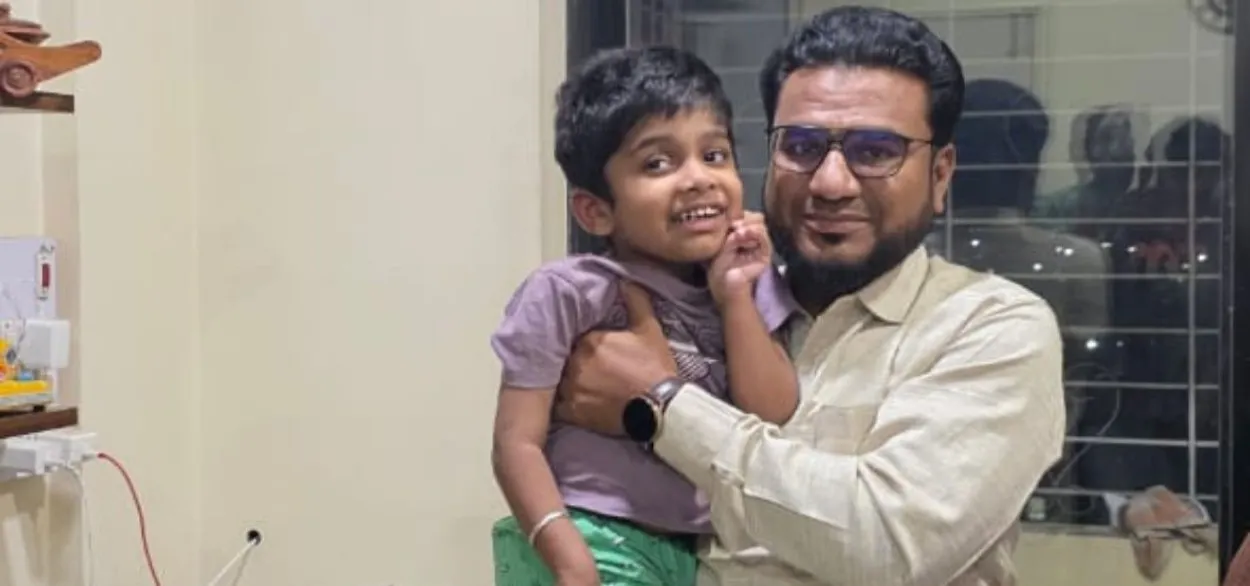
For Usman Sharief, faith is not confined to a place of worship. It is reflected in how people treat one another, how communities respond to those in need and how willing they are to step beyond familiar boundaries to understand each other. In Bengaluru, a city shaped by diverse cultures and communities, Sharief has spent years working to make unity, social service and interfaith understanding part of everyday community life.
His work has found a visible expression through the celebrations of Milad un Nabi, but he sees the occasion as much more than a religious gathering. Through Sunni Jamiatu Ulama Karnataka and his association with Masjid Qadiriya, he has been involved in initiatives that bring together people from different faiths while also encouraging community service and youth participation. Looking back at the large Milad celebration held in Bengaluru, Sharief recalled how organisations came together for the occasion and how the gathering became an opportunity to convey a wider message.
 Usman Sharief with Cardinal Louis from the Vatican
“Many people had come in it, who were addressed and I think a message of unity and harmony was given in a very good manner,” he said.
That emphasis on bringing people together is also visible in the annual Milad gatherings associated with his organisation. Religious scholars and community leaders are joined by guests from other faiths, including Hindu and Christian representatives. Sharief recalled how a Hindu religious leader and a Christian Bishop had participated in previous gatherings and spoken about Prophet Muhammad, his character and his life.
For him, such moments are important because understanding often begins with simply being willing to listen. Rather than allowing religious identity to become a boundary, these interactions create an opportunity for people to encounter one another directly.
The same philosophy extends into the community service initiatives associated with Milad. Blood donation camps, ration distribution and other welfare activities have become part of the broader programme. Sharief is keen to stress that these efforts are not restricted to one religious occasion.
“Our activities we have divided throughout the year. It is not that you celebrate Milad for one day and then get busy with other things,” he explained.
 Usman Sharief with Vinay Swamiji, Archbishop Dr. Peter Machado, IPS officers, and Politicians
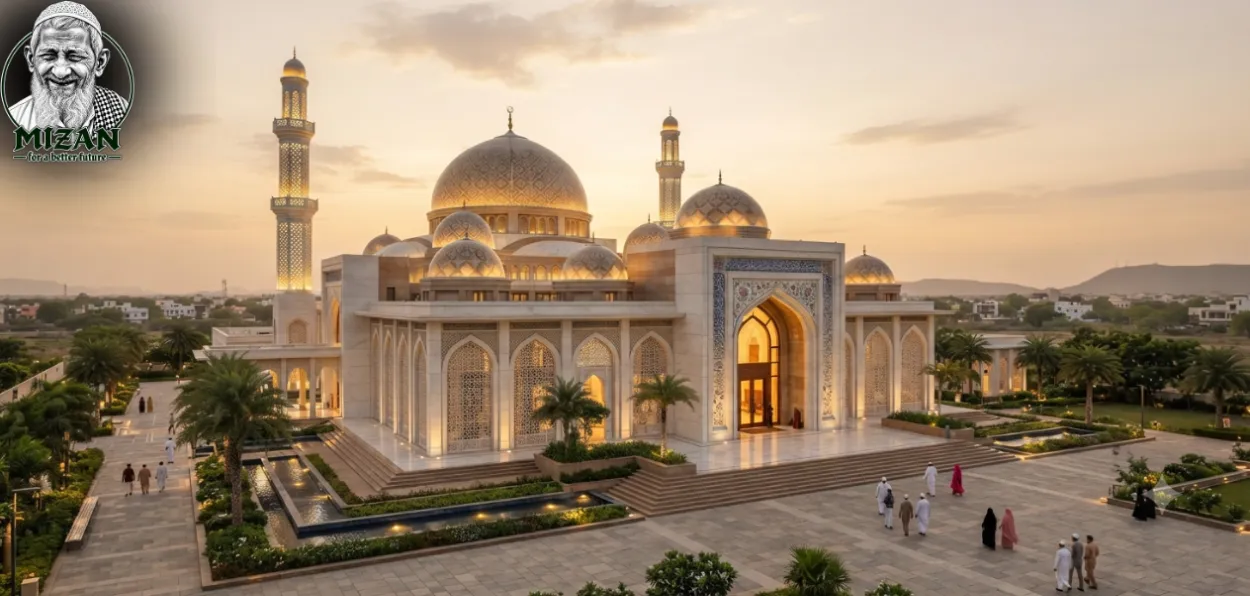
That belief in year round service has shaped the activities at Masjid Qadiriya as well. The mosque has welcomed students from schools and colleges, representatives of Christian organisations and visitors from different parts of the world. For Sharief, opening the doors of a mosque to those who may never have experienced one closely is an opportunity to replace assumptions with understanding.
Visitors are introduced to the practices associated with entering a mosque, performing ablution and offering prayer. Religious practices are explained rather than simply observed, allowing visitors to ask questions and understand the meaning behind what they see. At the end of their visit, they may even leave with a flower pot as a small gesture of hospitality.
Sharief sees this simple act as a way of creating a lasting memory. When visitors care for the flowers at home, he hopes they will remember the mosque, the people they met and the experience they had there.
This approach has become particularly relevant at a time when much of the younger generation encounters religion through digital platforms. Sharief recognises the influence social media has on young people and believes that simply criticising their online habits will not bridge the gap between generations.
 Usman Sharief with Vinay Swamiji, Archbishop Dr. Peter Machado, IPS officers, and Politicians
“The youth we have now, it is the future of the country,” he said. His approach is instead to understand the way young people think and communicate. He believes that they are increasingly willing to question what they see online rather than accepting everything at face value. For him, that curiosity should be met with patience, knowledge and meaningful dialogue.
“You need to put yourself in their shoes, and understand how they will be able to communicate and connect with you,” he said. This thinking has also influenced the involvement of younger religious scholars in community outreach. Sharief spoke about combining the experience of senior scholars with the energy of younger scholars so that religious guidance can remain accessible to a generation accustomed to asking questions and searching for information online.
“The expertise of the aged Ulama, the senior Ulama, at the same time with the energy of the young Ulama, that is how we will strike a balance and Insha Allah try to serve the best,” he said.
His work also extends to the practical challenges of bringing large communities together. Bengaluru frequently sees celebrations of different faiths taking place around the same time, making coordination and cooperation essential. Sharief described how volunteers work closely with the police and divide responsibilities among themselves, including crowd management, parking, food arrangements and stage management.
“We divide the responsibilities and we share the responsibilities,” he said. Perhaps the most memorable example of this cooperation can be found during religious processions. Sharief recalled how volunteers distribute water, juice and biscuits to people participating in processions organised by other communities, while similar gestures are extended when the Milad procession passes through the same areas. What might appear to be a small act of hospitality becomes, in his view, a visible expression of coexistence.

His emphasis on harmony also comes from a desire to address misconceptions surrounding Islam. Sharief acknowledges that social media can sometimes amplify incomplete or misleading interpretations of religion. His response is to encourage visitors to ask questions and allow religious scholars to explain the relevant teachings using the Quran and Hadith.
Among the messages shared with visitors is the Islamic teaching on the sanctity of human life. Sharief explained that visitors are told that saving an innocent life is regarded as saving humanity, while taking an innocent life is regarded with the gravity of killing humanity.
For him, these conversations matter because misconceptions rarely disappear on their own. They require people to meet, speak honestly and create opportunities for questions that may otherwise remain unanswered.
His belief in the value of such encounters is evident when he speaks about young people who visit places of worship belonging to different communities. Sharief appreciates parents who encourage their children to explore beyond what they already know.
“I want to praise the parents of those children,” he said, referring to families who encourage young people to visit mosques, temples and churches. There is something distinctly human in that sentiment. Sharief’s work is ultimately less about grand declarations and more about creating opportunities for people to meet one another without fear or preconceived ideas. A blood donation camp, a conversation inside a mosque, a glass of water offered during a procession or a flower pot given to a visitor may seem like small gestures individually. Together, they form a larger philosophy of community engagement.
READ MORE: Kashmir's Sadiq Ali Mir founded his aerospace startup in college
In a city as diverse as Bengaluru, that philosophy carries a simple message. Unity does not require everyone to share the same beliefs. It requires the willingness to understand those who do not. For Usman Sharief, faith finds its strongest expression when it moves beyond the walls of the mosque and becomes service, hospitality, dialogue, and humanity.